Why Should Lenders and Title Agents Choose eClosings?


Updated September 8, 2026
The mortgage closing process is going digital, and lenders who have not made the shift are leaving money on the table. An eClosing is the act of closing a mortgage loan electronically, through a secure digital environment where closing documents are executed and accessed online instead of on paper. For lenders and title agents evaluating ways to digitize the closing process, the case is no longer theoretical. The data on cost savings, error reduction, and borrower satisfaction is clear.
Key takeaways
- A full eClosing can save lenders up to $444 per loan and deliver approximately $100 in ROI per transaction for title agents, according to a study with MarketWise Advisors.
- eClosings come in two primary forms: hybrid eClosings, which move document signing online while keeping notarization in person, and full eClosings, which take the entire process digital including eSigning, eNote, eRecording, and online notarization.
- Digital closing workflows reduce errors by approximately 33%, primarily by eliminating missed signatures that force costly re-draws.
- Lenders and title agents can adopt eClosings incrementally, starting with document digitization and eSignatures before advancing to online notarization, eNote, and eVault.
- Borrowers increasingly expect digital options. Lenders who offer eClosings expand their addressable market and earn referrals from borrowers who value the convenience.
What is an eClosing?
An eClosing is a mortgage closing where some or all of the key elements of the transaction occur online rather than on paper. The term covers a range of digital closing models, from partial digitization to fully remote closings.
Hybrid eClosing: A hybrid eClosing moves elements like document signing online while the remaining steps, such as notarization, still happen in person. This is often the entry point for lenders and title agents beginning their digital transformation.
Full eClosing: A full eClosing takes the entire process digital, including eSigning, eNote, eRecording, and online notarization. No in-person meeting is required. The borrower can close from anywhere with an internet connection.
Both models provide measurable benefits for lenders and title agents. The right choice depends on your current infrastructure, your borrowers' preferences, and the compliance requirements in the states where you operate.
Types of eClosings: understanding your options
The industry recognizes four main closing types, each distinguished by which documents are signed electronically and what kind of notarization is used.
- In-Person eNotarization (IPEN): All documents are digital and eSigned. Notarization happens in person, with the notary and signer in the same room. The notary uses a digital seal and eSignature rather than a physical stamp.
- Hybrid eClosing: The promissory note and notarized documents are signed with wet ink in person. All other closing documents are digital and eSigned. This is the most common entry point for lenders adopting eClosings.
- Remote Online Notarization (RON) eClosing: All documents are digital and eSigned. Notarization happens via a live video session between the notary and the signer. The notary verifies identity using credential analysis and knowledge-based authentication (KBA) before applying a digital seal.
- Full digital eClosing with eNote: The entire closing, including the promissory note, happens digitally. The eNote is registered with the MERS eRegistry upon execution. This is the most operationally efficient model and delivers the highest ROI.
The ROI of eClosings for lenders and title agents
eClosings deliver measurable financial returns for both sides of the transaction. A study conducted with MarketWise Advisors found that a full eClosing can provide up to $444 in savings per loan for lenders and approximately $100 ROI per transaction for title agents. Multiply those figures across hundreds of closings per year, and the math is significant.
The savings come from four operational improvements.
Organized document collection.With all closing documents in one platform, every party can see what has been prepared, what has been collected, and what is still needed before the closing date. No more chasing paperwork across email threads and fax machines.
Error reduction.Reviewing and updating documents digitally means fewer missing signatures, fewer incorrect fields, and far less rework. eSigning capabilities within an eClosing platform greatly reduce the risk of missed signatures that force costly re-draws. The MarketWise study found a 33% reduction in errors for eClosings compared to paper-based closings.
Time and labor savings.Fullydigital closings eliminate hours spent printing, copying, organizing, and mailing paper documents. Since an eClosing can be completed from anywhere, everyone in the transaction saves on travel time as well.
Faster cycle time.With all elements of a closing online, lenders are able to close and sell mortgages faster, shortening the timeline from application to funding. Faster funding means faster delivery to the secondary market.
How eClosings reduce fraud risk
Paper-based closings have a structural vulnerability: identity verification depends on a notary visually inspecting a government-issued ID. That check is increasingly unreliable. Real estate fraud losses hit $275 million in 2025, up 58% in a single year, and AI-generated fake IDs can pass standard visual inspection.
A well-designed eClosing platform addresses this directly. Identity verification in a digital closing workflow runs multiple automated checks before the signing session begins, including:
- Document capture and credential analysis to verify the authenticity of the government-issued ID
- Biometric comparison between the ID photo and a live selfie
- KBA questions drawn from credit report data to confirm identity
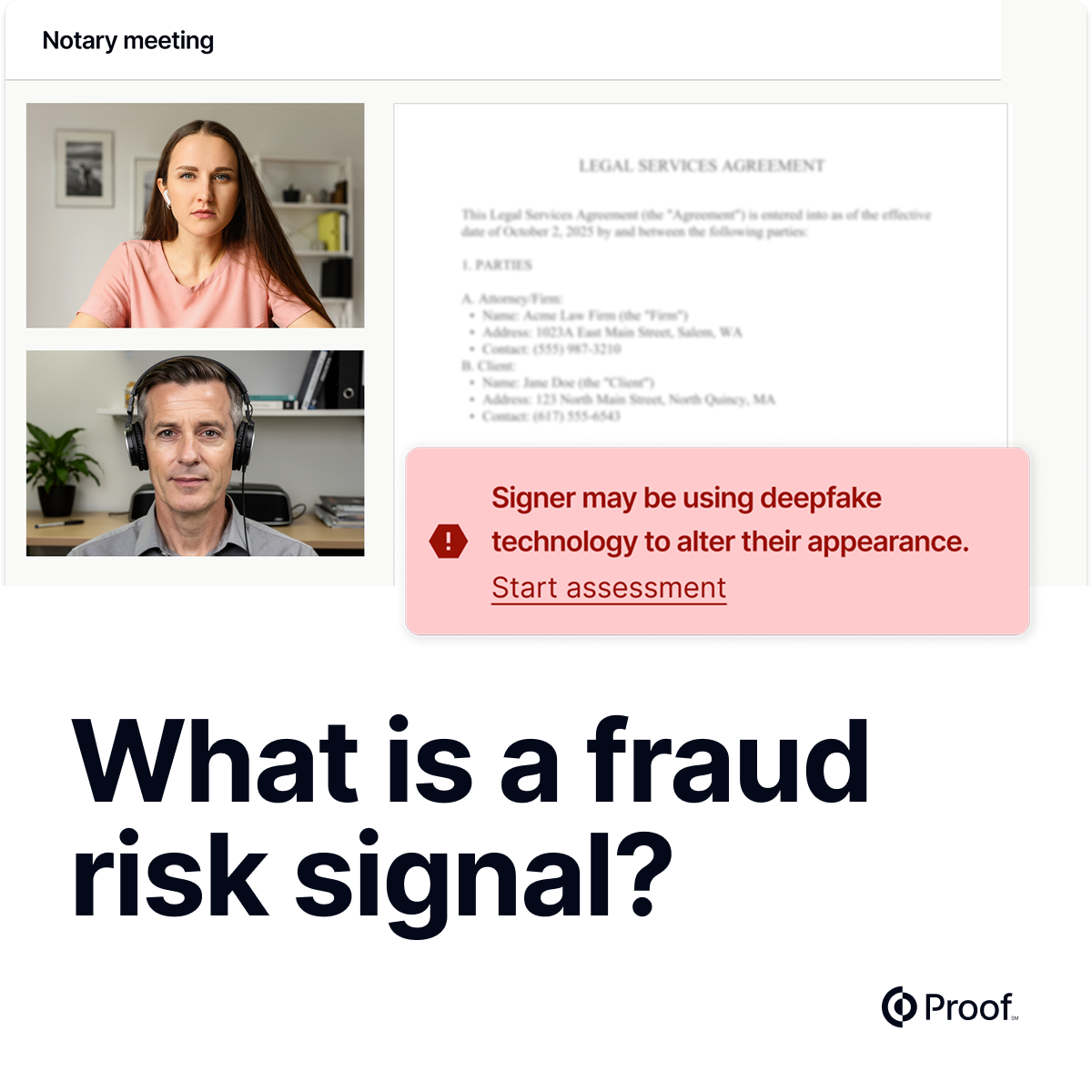
- Liveness detection to confirm the signer is a real person present in real time
When automated checks flag a risk, a live agent can review the session before the closing proceeds. This layered approach produces a defensible, auditable identity record that a paper closing cannot match.
For title agents specifically, this matters on the sell side. Seller impersonation fraud has increased as criminals use stolen identities and forged IDs to execute unauthorized property transfers. A digital closing with strong identity verification closes that gap.
Benefits beyond cost savings
ROI is only part of the story. Homebuyers, lenders, and title agents also benefit from the convenience and flexibility that comes with eClosings.
A fully digital closing allows the transaction to close remotely. A borrower could close while traveling, at work, or from home. That flexibility is no longer a differentiator. It is a baseline expectation. The majority of consumers bank online, and they expect lenders to offer online options as well.
Lenders with eClosing capabilities appeal to a wider customer base and earn referrals from borrowers who value the digital transformation experience. For title agents, offering digital closing options is increasingly a requirement to win business from lenders who have already committed to digital workflows.
There is also a post-closing benefit that often goes unmentioned. Digital closing packages are instantly accessible to all parties, securely archived, and available for future reference. When a dispute arises months or years later, a digital audit trail with timestamped signatures and a recorded identity verification session is far more defensible than a paper file.
How to get started with eClosings for lenders and title agents
Adopting eClosings does not require an overnight transformation. Lenders and title agents can ease into digital closings incrementally and still capture meaningful ROI at each stage.
Step 1: Digitize documents.The first step toward a fullydigital closing is moving all paperwork online. Digital documents are easier to edit, correct, and distribute. They eliminate time spent faxing, copying, or mailing.
Step 2: Enable eSignatures.Once documents are digitized, implement eSignatures. This allows borrowers and other parties to sign documents electronically from any device, reducing signing time and eliminating missed signatures.
Step 3: Choose an online notarization partner. By selecting an online notarization partner, you remove the need for borrowers to appear in person to notarize a document. Look for a platform with 24/7 notary availability, strong identity verification, and compliance with state RON laws.
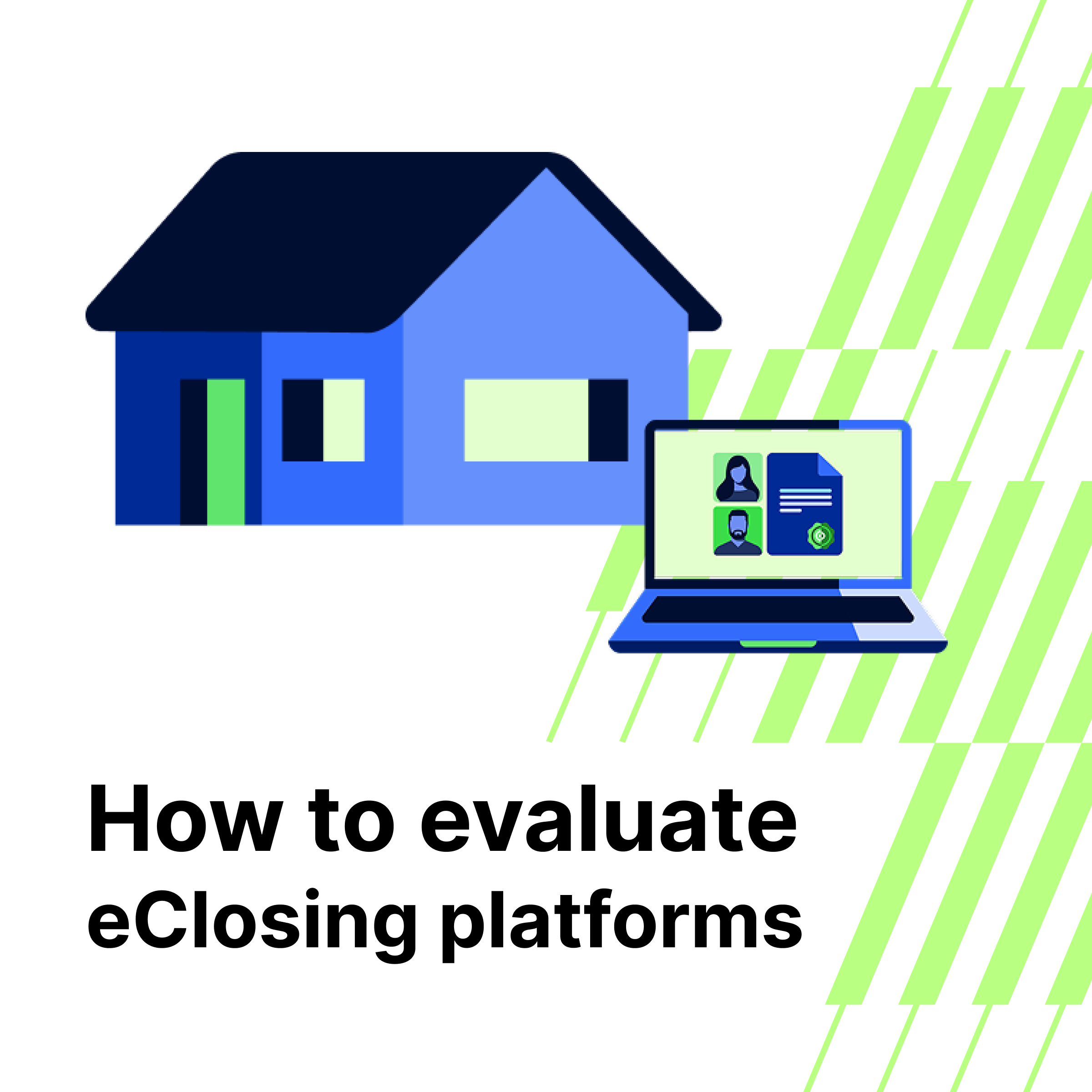
Step 4: Select an eClosing platform. An eClosing platform allows lenders to share information with title agents, realtors, and homebuyers. The software keeps documents and information organized, secure, and accessible, and enables faster mortgage processing. Evaluate platforms based on state eligibility coverage, integration with your loan origination system (LOS) or title software, and identity verification capabilities.
Step 5: Enable eNote and eVault. Often the final step to a full eClosing, the promissory note must be signed and certified according to specific requirements and registered with the MERS eRegistry. This step unlocks the highest ROI tier for lenders and enables faster secondary market delivery.
Step 6: Build internal adoption. Everyone involved in the transaction needs to understand the new process. Share early wins, including time saved, positive borrower feedback, and error reduction, to build momentum and demonstrate value to stakeholders across your organization.
What to look for in an eClosing platform
Not all eClosing platforms deliver the same compliance coverage or identity assurance. Before selecting a platform, evaluate these criteria.
- State and county eligibility coverage. A platform's fastest closing time is meaningless if it cannot legally close a loan in the state where your borrower lives. Confirm eligibility before evaluating anything else.
- Integration with existing systems. The platform should connect with your LOS, title software, and document preparation tools. Manual data entry between systems creates errors and slows closings.
- Identity verification depth. Look for platforms that run credential analysis, biometric comparison, and KBA as part of the identity verification flow. Confirm whether the platform meets NIST IAL2 standards.
- Notary availability. 24/7 notary access matters for borrowers who cannot close during business hours. Confirm whether the platform uses a notary network, supports in-house notaries, or both.
- Compliance automation. State RON laws, underwriter requirements, and company policies change. A platform that encodes compliance rules programmatically reduces your exposure to human error.
- Audit trail and post-closing access. Confirm that completed closing packages are instantly accessible to all parties and securely archived for future reference.
The trajectory of digital closings
With so many transactions moving online, eClosings are on their way to becoming the standard. Proof has now facilitated more than $640 billion in real estate transactions on its platform, a figure that reflects accelerating adoption across residential real estate. The pattern is consistent: once enabling infrastructure is in place and early movers commit, adoption accelerates quickly.
Lenders and title agents who invest in digital closing capabilities now build the operational muscle and borrower relationships that will be difficult for later adopters to replicate. The upfront investment in platform selection, integration, and staff training is real. The return, measured in cost savings per transaction, error reduction, and borrower satisfaction, justifies it.
See how Close by Proof powers digital eClosings for lenders and title agents.



























.jpg)








































.jpg)