Why Lenders Are Doubling Down on eMortgage Tech and What It Means for Title Agents


Updated June 1, 2026
The mortgage industry is moving digital at scale, and lenders who delay are competing at a cost disadvantage while carrying more operational risk than they need to. eMortgage technology is not just faster: it is a structural improvement that reduces fraud exposure, tightens compliance, and opens deals to borrowers who cannot or will not show up in person. For title agents, the shift means adapting to new workflows or getting left out of the deals where lenders are setting the pace.
Key takeaways
- Adoption is accelerating: eMortgage technology is no longer a pilot program. Lenders across the country are deploying it to reduce closing costs, cut errors, and serve borrowers remotely.
- The efficiency gains are documented: Proof customers have reported an average of 157 minutes saved per closing and $443 in cost savings per loan through digital closing workflows.
- Fraud prevention is a core benefit, not a side effect: Digital closings with built-in identity verification and tamper-evident records are harder to compromise than paper-based processes.
- Compliance is built in: The Proof Engine applies over 4.5 million compliance rules to every transaction, catching errors before they become regulatory problems.
- Title agents who adapt will be better positioned: Lenders are selecting partners based on digital capabilities. Title companies that can support eClose and RON workflows are more competitive for the business that matters.
The data: eMortgage momentum
Lenders are not adopting eMortgage technology because it sounds good in a pitch deck. They are adopting it because the operational case is clear and measurable. Closing a mortgage digitally eliminates the logistical overhead of in-person signings: printing, shipping, chasing wet ink signatures, re-keying data, and correcting errors that slip through in paper review.
Proof customers report an average of 157 minutes saved per closing and $443 in cost savings per loan. A 31% reduction in errors is also common, because digital workflows with embedded compliance logic catch problems that humans miss in a stack of paper. At scale, across hundreds or thousands of loans per year, those numbers have a direct impact on margin and capacity.
The borrower experience is part of the calculation too. Buyers today expect to handle more of the transaction from their phone or laptop. A closing that requires a specific in-person appointment, physical documents, and wet ink signatures creates friction that other lenders are already eliminating. When that friction costs you a deal, the business case for eMortgage technology becomes straightforward.
What eMortgage technology delivers
Faster closings
Digital closings eliminate the coordination overhead of in-person signings. Borrowers can review and sign documents from any device, at any time, without requiring a specific appointment or physical presence. For lenders, this means faster time-to-close and fewer deals that fall apart because of scheduling friction. For title agents, it means the ability to support more closings without adding headcount or scheduling capacity.
Fraud prevention
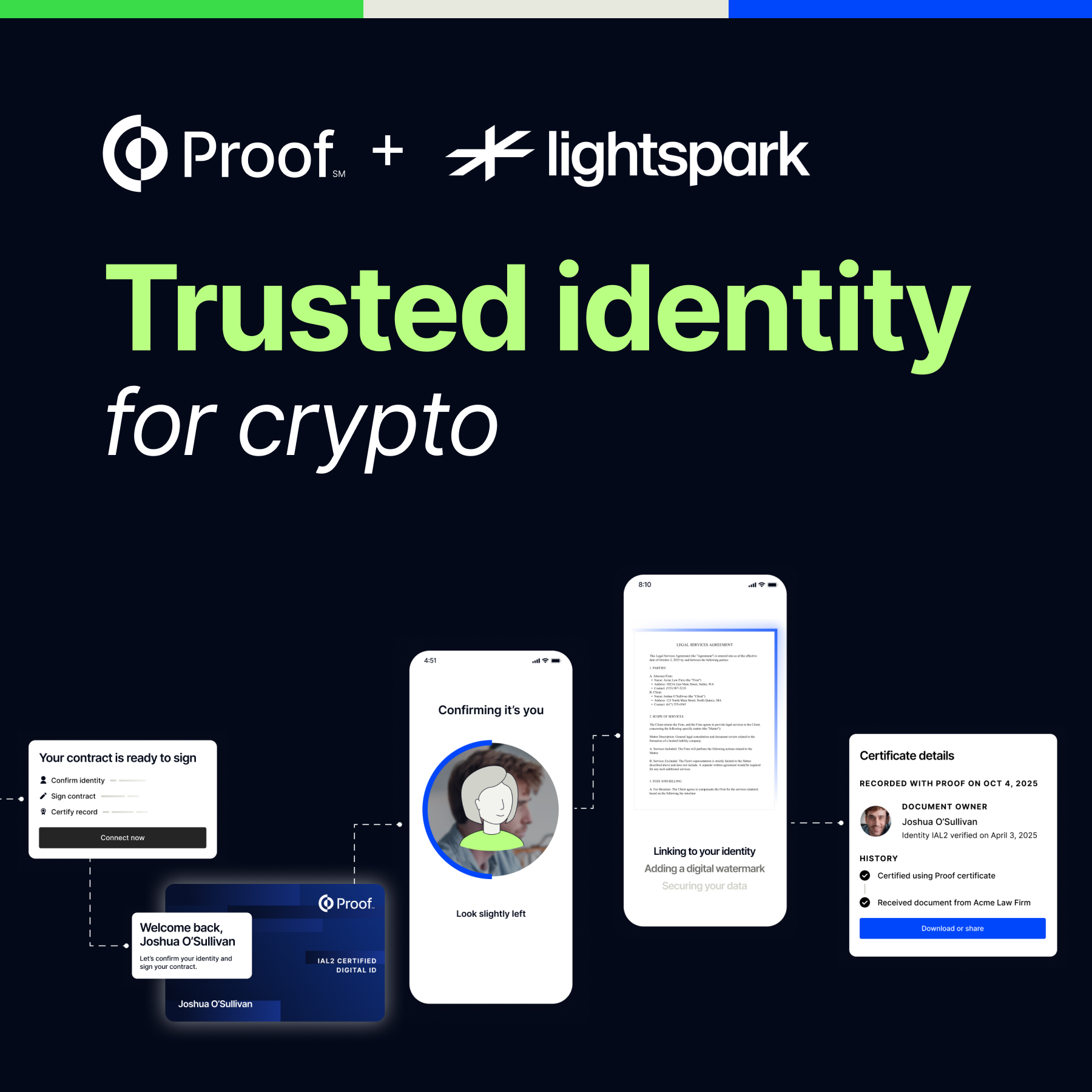
Paper-based mortgage closings have real fraud vulnerabilities: forged signatures, altered documents, and identity misrepresentation are all harder to detect in a paper stack than in a verified digital workflow. eMortgage platforms with built-in identity verification close those gaps by confirming signer identity before any document is accessed, and creating a tamper-evident audit record that locks after signing.
Common tactics:
- Forged signatures: In paper closings, signatures are difficult to authenticate in real time. Fraudsters exploit this by signing as someone else or coercing a signer under duress.
- Document alteration: Physical documents can be altered after the fact. Paper records are difficult to audit comprehensively.
- Identity misrepresentation: Without verified identity checks at the point of signing, there is no reliable confirmation that the person signing is the person named in the loan documents.
- Straw buyer schemes: Fraudsters use real or stolen identities to obtain mortgages with no intention of repayment, often in coordinated rings across multiple transactions.
What you can do:
- Require verified identity confirmation for every signer before any loan document is accessed or executed.
- Use liveness detection in biometric verification to confirm physical presence and defeat synthetic presentation attacks.
- Ensure that every completed document package includes a tamper-evident audit trail with identity verification results attached.
- Monitor for transaction anomalies with AI-driven fraud detection that flags suspicious patterns across your loan portfolio, not just on individual transactions.
Compliance, built in
Mortgage compliance is not optional, and errors are expensive: failed audits, buyback demands, and regulatory penalties all trace back to documentation problems that started at closing. The Proof Engine applies over 4.5 million compliance rules to every transaction, catching jurisdiction-specific requirements, missing fields, and process errors before the document package leaves the table.
For lenders operating across multiple states, this matters enormously. Compliance requirements vary by jurisdiction, and manual review cannot reliably catch every variation. Embedding compliance logic directly into the closing workflow means errors surface before they become buyback events, not after.
Integration
eMortgage technology works best when it connects to the systems lenders and title companies are already using. Proof integrates with existing loan origination systems, title platforms, and document management workflows, so adoption does not require a wholesale technology replacement. The digital closing layer sits on top of existing infrastructure and adds verified identity, compliance logic, and tamper-evident records without forcing a rip-and-replace project.
How Proof helps lenders and title agents
Proof gives lenders and title companies a single platform that handles the full digital closing workflow, from identity verification through notarization to document execution.
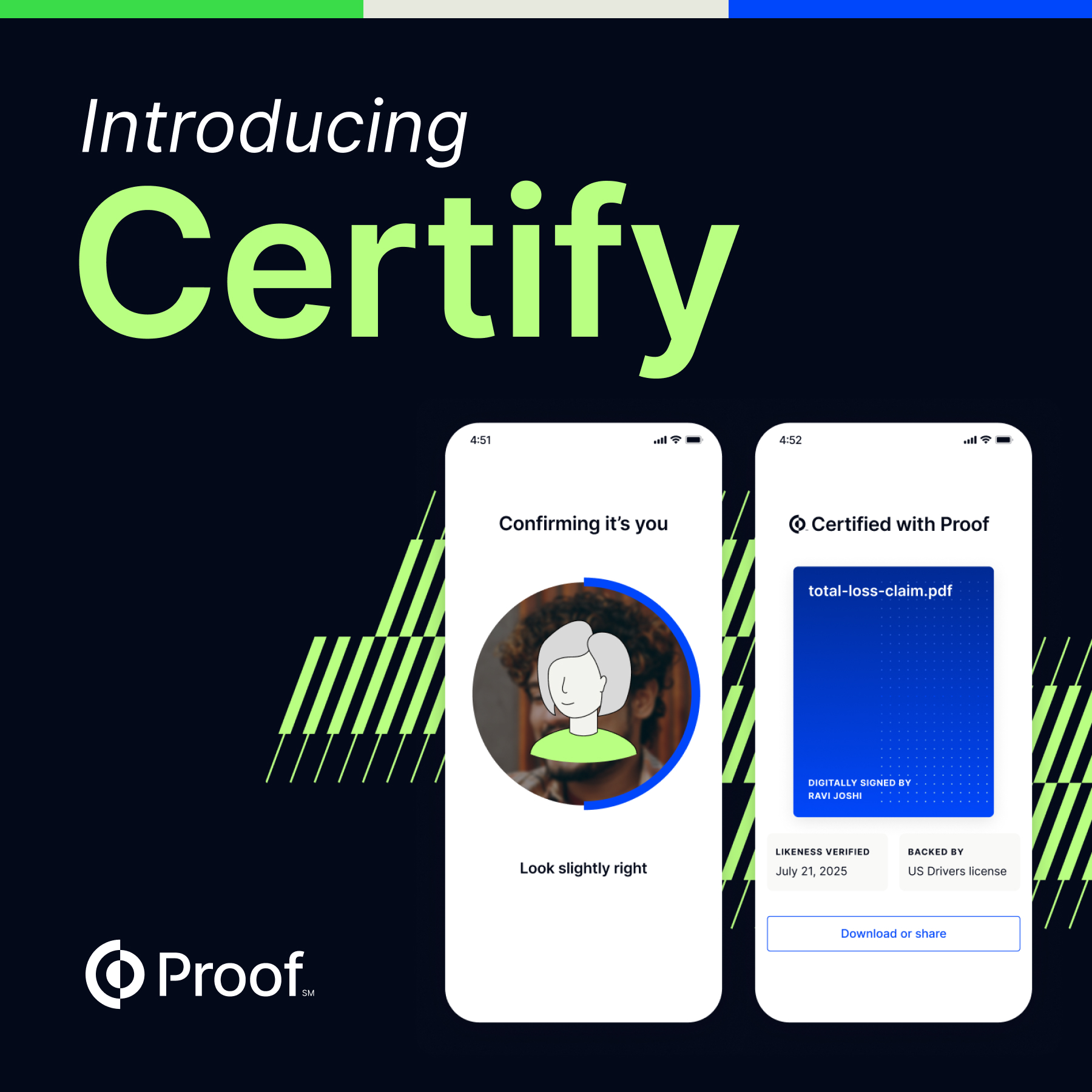
Proof Close powers eSign and Remote Online Notarization in one integrated workflow. Borrowers verify their identity, review documents, and sign from any device. Title agents manage the process from a centralized portal with full visibility into every step.
Notarize by Proof handles the notarization component with a network of commissioned notaries available around the clock. Whether the transaction requires a standard eNotarization or a witnessed Remote Online Notarization, the workflow is built in and compliant.
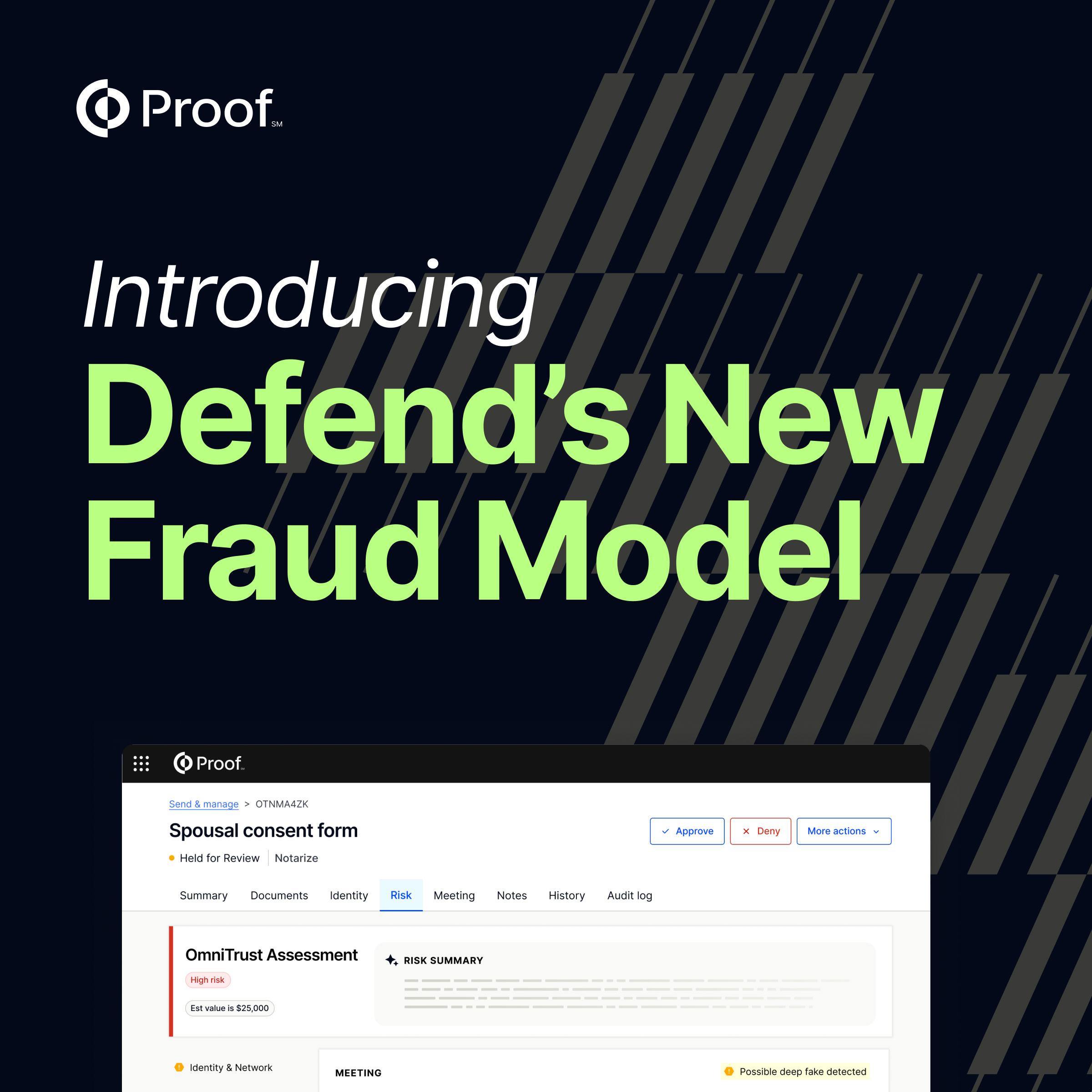
Proof Defend monitors every transaction for fraud signals in real time, including deepfake detection on live video sessions, document manipulation checks, and anomalous behavior patterns across the loan portfolio. When a signal is flagged, your team has the context to act before the deal closes.
The combination gives lenders a defensible record for every loan and gives title agents the digital capabilities that make them competitive partners for the business lenders are bringing. Start with a demo to see how Proof works across your closing workflow: schedule time with our team.















.jpg)






















































.png)

.jpg)